Most people don’t recognize a collapsing trachea in dogs straight away. It doesn’t always look dramatic at first. For many pet parents, it starts with a strange sound, a dry, goose-like honk that comes out of nowhere, usually when the dog gets excited, pulls on the lead, or drinks water too fast.
The sound stops as suddenly as it starts. Your dog seems fine again. But you’re not.
That moment of confusion is often the beginning of learning about collapsed trachea in dogs, a condition that’s far more common than many people realize, especially in small breeds. That’s why, in this blog, we’ll walk you through what collapsing trachea in dogs really means, the symptoms to watch for, why some dogs are more prone than others, and the practical ways in which vets and pet parents manage this condition long-term. Read on.
What is a Collapsed Trachea in Dogs?
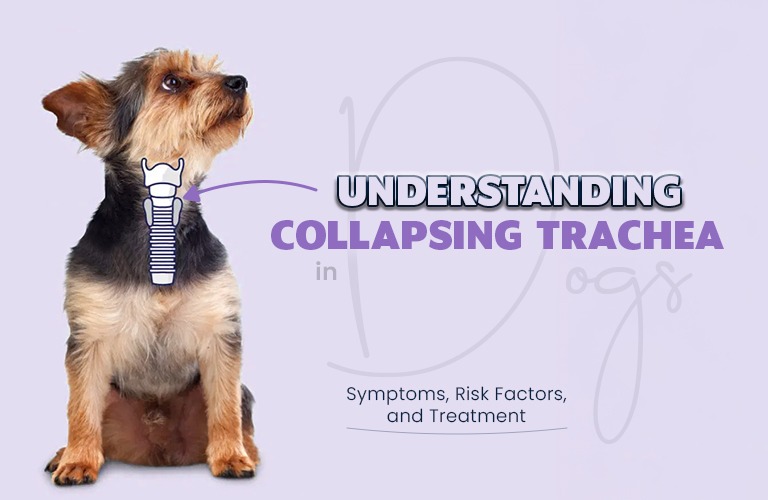
The trachea (windpipe) is made up of small C-shaped cartilage rings that help keep the airway open while your dog breathes. In a healthy dog, those rings are firm enough to hold their shape. In dogs with a collapsing trachea, those cartilage rings weaken over time. Instead of staying open, the trachea partially flattens, making it harder for air to move in and out. That’s when coughing, breathing noises, and breathing difficulty start to show up.
A dog’s collapsed trachea condition can affect the neck area, the chest area, or both. It’s usually progressive, meaning it doesn’t improve on its own, but it can be managed very well with the right care.
Common Symptoms Pet Parents Notice First
The symptoms don’t always look the same in every dog, which is why this condition is often missed early on. Some of the most common signs of a collapsed trachea that dog parents report include:
- A dry, honking cough (often compared to a goose honk)
- Coughing during excitement, exercise, or stress
- Gagging or retching, especially after drinking water
- Noisy breathing, especially when inhaling
- Worsening cough in hot or humid weather
- Trouble breathing after pulling on a collar
- Fainting episodes in severe cases
Many dogs act completely normal between coughing episodes, which can make the condition feel unpredictable and unsettling for pet parents.
Which Dogs Are Most at Risk?
While any dog can develop this condition, collapsed trachea in dogs is most commonly seen in small and toy breeds. Breeds with higher risk include:
- Pomeranians
- Yorkshire Terriers
- Chihuahuas
- Toy Poodles
- Maltese
- Shih Tzus
Age also plays a role. Some dogs are born with weaker tracheal cartilage, while others develop a collapsing trachea condition as they get older.
Additional risk factors include:
- Obesity
- Chronic respiratory infections
- Exposure to smoke or strong chemicals
- Poor air quality
- Constant collar pressure
- Genetics plays a role, but lifestyle and environmental factors can significantly influence how severe the condition becomes.
How Vets Diagnose Collapsed Trachea in Dogs
Diagnosis usually starts with a physical examination and listening to your dog’s breathing. In many cases, gentle pressure on the trachea can trigger the characteristic cough. To confirm the diagnosis, vets may recommend:
- X-rays
- Fluoroscopy, or CT scan (real-time imaging)
- Endoscopy in more complex cases
These tests help determine the severity and location of the collapse, which is important for treatment planning.
Treatment Options for Collapsed Trachea in Dogs
There’s no permanent cure for a collapsed trachea, but many dogs live long, comfortable lives with proper management.
Medical Management (Most Common)
- Cough suppressants
- Anti-inflammatory treatments
- Bronchodilators
- Antibiotics (if infection is present)
Most dogs respond well to medical management when combined with healthy lifestyle changes. Weight management is critical. Even a small amount of extra weight can put additional pressure on the airway.
Surgical Treatments (Severe Cases Only)
Surgery is usually reserved for dogs who don’t respond to medical management. Options may include:
- Plastic rings placed externally
- Internal stent placement
It may be considered when symptoms become life-threatening and unresponsive to common treatments. Surgery carries risks and isn’t suitable for every dog, but it can significantly improve quality of life in carefully selected cases.
How to Soothe a Dog With a Collapsed Trachea at Home
This is the part most pet parents really want to know: what you can do day to day to improve the quality of your dog’s life. Here’s what genuinely makes a difference:
Switch to a harness: Neck collars put pressure directly on the trachea. A well-fitted harness is non-negotiable.
Control excitement: Easier said than done, but reducing sudden bursts of excitement helps limit coughing fits.
Keep the air clean: Avoid smoking, incense, strong cleaning sprays, or perfumes around your dog.
Maintain a healthy weight: This alone can reduce symptoms significantly.
Use humidity wisely: Dry air can irritate airways. A humidifier can help in some homes.
Stick to treatment schedules: Skipping doses often leads to flare-ups.
Living With a Collapsed Trachea Dog: What to Expect
Hearing the diagnosis can be scary. Many pet parents immediately imagine the worst. But, the reality? Most dogs with a collapsing trachea diagnosis continue to enjoy walks, playtime, cuddles, and a good quality of life, especially when symptoms are caught early and managed properly.
The condition may progress slowly, but with monitoring and adjustments, many dogs remain stable for years. While many episodes pass with calm handling, seek urgent care if your dog:
- Struggles to breathe
- Turns blue around the gums or tongue
- Collapses or faints
- Has coughing episodes that don’t stop
And at last, trust your instincts. If something feels wrong, it probably is.
Final Thoughts
Hearing that your dog has a collapsing trachea is scary. Once you understand what’s happening inside your dog’s airway, the coughing becomes less frightening and more manageable. You will eventually learn what triggers symptoms, how to soothe flare-ups, and when to contact your vet. A dog’s collapsed trachea diagnosis doesn’t define your dog’s life; it simply changes how you care for them. And, honestly, that’s what good pet care is about: understanding their limits and helping them live well within them.
Frequently Asked Questions
1. Does a collapsing trachea get worse over time, or can it stay stable?
It can progress, but it doesn’t always. Many dogs stay stable for years when their weight, environment, and medications are well managed. Regular vet check-upshelp catch changes early before symptoms escalate.
2. Can stress or anxiety make my dog’s coughing worse?
Absolutely. Stress, excitement, and anxiety are common triggers for coughing fits. Calm routines, predictable environments, and gentle reassurance often reduce episodes more than people expect. Even small changes in daily routine can help.
3. Is a collapsed trachea painful for dogs?
The condition itself isn’t usually painful, but coughing episodes can be uncomfortable and distressing, especially when breathing feels restricted. That’s why managing triggers and keeping flare-ups under control make such a big difference to their comfort.