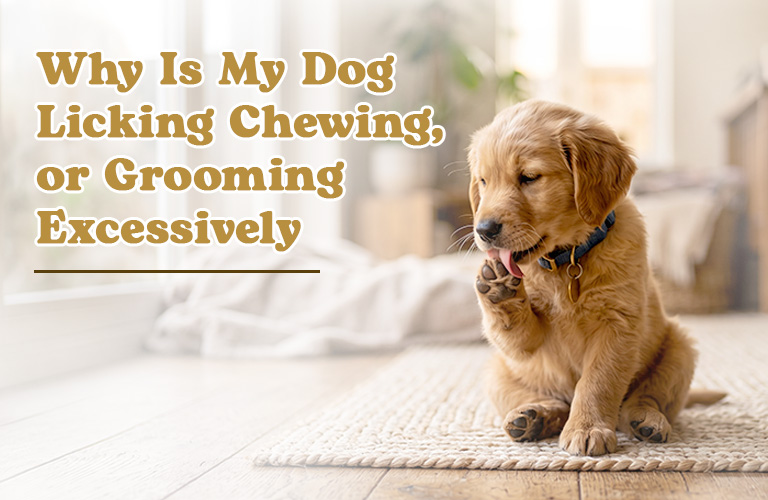
A little licking, chewing, and grooming is just part of being a dog. But when your canine companion keeps licking the same paw, biting the same spot on their skin, or grooming themselves for what feels like half the day, it’s worth paying attention.Persistent licking, chewing, or grooming can be a sign that there’s an underlying problem.
From allergic itching to parasites and behavioural issues, there are various reasons why dogs lick, chew, or groom themselves obsessively. Understanding the reason behind it can help you provide timely treatment and relief from discomfort and pain.
Why Is My Dog Licking, Chewing, or Grooming So Much?
Here are seven common reasons why do dogslick themselves excessively:
1. Allergies
Allergies can trigger itching and irritation, causing dogs to start licking or chewing to comfort themselves. Dogs can react to environmental allergens such as pollen, mould, and dust mites, as well as certain ingredients in food. Moreover, flea bites can also cause allergies, such as flea allergy dermatitis. For sensitive dogs, even one flea bite can trigger significant itching.
2. Parasites
Parasites such as fleas and mites can cause excessive licking or chewing because they can trigger itching, irritation, and discomfort. Dogs often try to soothe themselves through grooming. However, it can also disrupt the skin barrier and lead to secondary skin infections. Therefore, it is important to use a vet-recommended flea and tick treatment throughout the year.
3. Bacterial or yeast skin infections
Bacterial and yeast infections can make a dog very uncomfortable. These infections may occur as a primary skin problem or develop secondarily when allergies, parasites, injuries, or other conditions damage the skin.If you notice any signs of skin infections, such as redness, odour, flaky skin, discharge, moist sores, or thickened skin, consult your vet to identify the underlying cause.
4. Injuries
Dogs don’t always whine or cry when they’re in pain. Some may repeatedly lick the area that hurts. A sore paw, cracked nail, minor cuts, insect sting, foreign object, or other injuries can trigger focused licking or chewing. If your dog suddenly starts obsessing over one particular spot, especially if they’re limping or reluctant to move, check for any wounds or foreign objects.
5. Pain
Overgrooming or licking can occasionally be linked to pain associated with joint issues, anal gland problems, or gastrointestinal discomfort. Dogs maylick their lips, paws, or stomach area, or rub against the carpet, bedding, or other surfaces when they are experiencing pain. If this behaviour is accompanied by signs like drooling, reduced appetite, vomiting, diarrhoea, or unusual stomach noises, consult your veterinarianpromptly for treatment.
6. Urinary tract infections
Frequent licking or grooming near the genitals can indicate pain, irritation, or inflammation associated with aurinaryhealth issue or a urinary tract infection. If it is accompanied by symptoms like frequent urination, genital discharge, strong urine odours, or cloudy or dark urine, talk to your vet to determine the underlying cause. In some cases, wet or matted fur around the groin may also cause focused grooming.
7. Behavioural issues
Some dogs lick or groom themselves or chew objects like carpets and furniture when they’re bored, frustrated, anxious, or stressed. Changes in routine, separation, loud noises, or a lack of physical and mental stimulation can contribute to such behavioural problems. In some dogs, repetitive licking can become a compulsive behaviour that’s difficult to interrupt.
How Can I Stop My Dog from Excessive Licking or Chewing?
The most effective solution is to treat the reason behind the behaviour and not simply stop the licking. Depending on your dog’s signs, your veterinarian may recommend skin tests, parasite testing, bloodwork, urine testing, imaging, or other diagnostic tests.
At home, keep your dog’s parasite prevention up to date, provide regular exercise and enrichment, and try to redirect repetitive licking or chewing towards an appropriate activity such as an interactive puzzle toy or training game. Avoid yelling at or punishing your dog, as punishment can make the matter worse in most cases.
If your dog has any obvious signs of disease or discomfort, such as raw skin, bleeding, open wounds, significant hair loss, swelling, or diarrhoea, or simply seems unwell, a vet visit can help identify the underlying cause and determine whether treatment is needed.
The Bottom Line
Occasional grooming, chewing, or licking is normal, but if your dog does this persistently,it shouldn’t be ignored. Whether the trigger is an allergy, infection, or stress, finding the underlying cause is the key to breaking the cycle and helping your dog feel comfortable again.