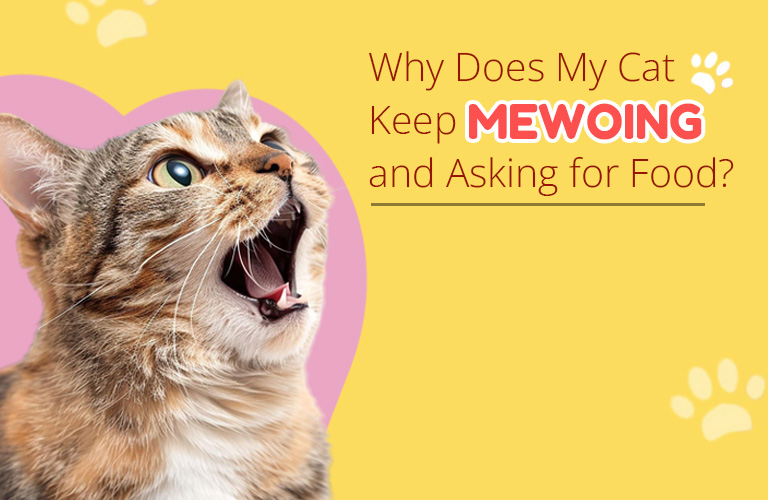
Parenting a cat is one of the most magical experiences.These fluffy little creatures can surprise us every day with their quirky behaviours. But as cat parents, it’s important to understand the reasons behind theirbehaviour and recognize when a change may warrant veterinary attention. In this blog, we’ll specifically discusswhy cats may meow or vocalize when they want food. According to experts, a range of factors can contribute to such behaviour in felines. We’ll help you decode them.
Read on to find out more!
Why is My Cat Always Hungry?
Cats can have different food preferences and eating habits, so frequent requests for food do not necessarily mean there is a health problem. However, a noticeable increase in appetite or persistent food-seeking may sometimes be associated with an underlying health issue. Let’s look at some of the scenarios and their probable reasons.
- Crying for Food at Scheduled Hours
Cats are great with timing; they can learn and remember familiar feeding routines. If you serve them food around the same time each day, they may learn to anticipate mealtime. Therefore, they may start meowing around that time because they have learned to associate it with food. This doesn’t imply that they are starving or have any physical condition. It is just a signal that they want to have their meal.
- Whining for Treats
Cats love delving into treats. Therefore, if your kitty sees you in a specific place where you store your treats, it may start meowing for them. Cats are also superb listeners. Therefore, if they hear you picking the treat container or bag, they may come over instantly and start vocalising for treats.
- Stealing Food
Cats are foodies and love to eat food that’s not in their bowl. Therefore, if you leave food such as fish or chicken unattended on a table or counter, your kitty may try to jump in to devour them.
- Gobbling
Cats that have had the experience of competing or fighting for food are likely to eat their meals very quickly. They may also growl while eating, eat defensively, or gulp their foodquickly. This behaviour is common with rescue cats who have been strays previously or have been a part of a large litter of kittens where they’d have to compete with other kitties if food was limited.
- Throwing Up After Eating
Being active groomers, catsmay swallow some loose hair. In many cats, the hair passes through the digestive tract, but some cats may occasionally develop hairballs and bring them up. If they’re unable to eliminate them with their faeces, theymay eventually regurgitate or vomit it. Therefore, if you suspect your cat is throwing up food due to a hairball being stuck in its stomach or intestines, you should seek veterinary help. The vet may conduct an X-Ray to help determine if there is a hairball in your kitty’s stomach and suggest appropriate treatments, if required.
Ending Note
When a cat constantly meows for food,the behavior may reflect a learned habit, a desire for attention, hunger, or another underlying need rather than simply being “greedy.” Therefore, as a cat parent, you can establish a consistent feeding routine for your purring baby and enrich their environment by introducing interactive toys to help them remain satisfied and happy.