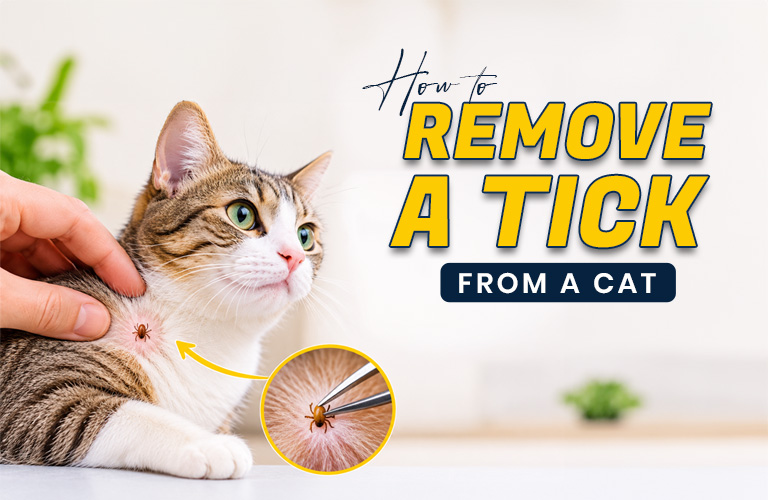
Finding a tick on your cat is stressful. You feed them well, you keep an eye on them, and then suddenly there’s a bug stuck to their skin. Your first instinct is to get it off as soon as possible.
Breathe a little. Pulling a tick the wrong way can hurt your cat or leave the tick’s mouthparts embedded in the cat’s skin. This blog covers the common symptoms of ticks on cats along with a step-by-step guide to remove a tick safely from your feline friend.
Common Signs of Ticks on Cats and where you can Spot them
Take a look at the common symptoms of ticks on cats:
- Bumps or lumps on the cat’s skin that you can see or feel
- Redness or swelling around the bite
- Persistent scratching
- Fever
- Lethargy
- Pale gums
- Excessive grooming
Ticks can be difficult to spot. When looking for ticks on your cat, check between the toes, under the collar, around the neck, inside and around the ears, armpits and groin and at the base of the tail.
Which Tools You’ll Need
To remove the tick, you will need a few essentials. Here’s the list:
- A tick-removal tool or fine-tipped tweezers
- Disposable gloves
- Rubbing alcohol
- A small container with a lid
- Treats for your cat
Removing the Tick: Step-by-Step Guide
Take a look at the simple steps to remove the tick effectively from your cat:
1. Keep your cat calm.
Your cat isn’t going to enjoy this, so ask someone from the family or a friend to hold the cat while you are at work. Take your position and hold it until the job is done.
2. Part the fur and find the tick.
You probably know where the tick is. Wear gloves and gently part the fur with one hand. Keep your other hand ready with the tweezers or tick removal tool.
3. Grasp the tick close to the skin.
Grab it as close to your cat’s skin as you can, without squeezing its body. Then slowly and steadily pull it straight out. Don’t twist it and don’t jerk.
4. Clean the bite area.
Once the tick is out, look at the spot for redness or swelling and clean it the way your vet recommends. This step matters because many ticks carry diseases and cleaning lowers the chance of infection.
5. Get rid of the tick.
Drop the tick into a small jar with isopropyl alcohol. Flush it down the toilet right away.
6. Watch your cat.
Keep an eye on your cats and look for signs, such as loss of appetite, listlessness, yellow or orange gums, and laboured breathing. If you see any of these, call your vet right away.
After removing the tick, check the rest of your cat’s body. For prevention, regularly administer tick treatments recommended by your veterinarian. Wash their bedding often and vacuum the places where the feline spends most of its time. Check your cat’s resting areas for ticks and control the tick population in your cat’s surroundings.
What Not to Do
A few mistakes can make the removal of the tick difficult:
- Don’t put oil, glue, or other home remedies on the tick or your cat. Do not apply rubbing alcohol directly to the cat’s skin. It is only for the disposal of the tick after removing it.
- Don’t dig at the bite with a needle, and don’t probe the skin to remove embedded tick mouthparts. If you believe tick mouthparts are left in the cat’s skin, contact your vet.
Frequently Asked Questions
Q. How to remove tick from cat?
A. Use suitable fine-tipped tweezers or a tick-removal tool. Grip the tick as close to the skin as possible and pull straight out with steady pressure without squeezing it.
Q. How do I protect my cat from ticks?
A. Remove any attached ticks carefully using fine-tipped tweezers or a tick removal tool. You can protect your cat from new ticks by administering vet-recommended tick control treatments.
Conclusion
Removing ticks from your cat can be a pain no feline parent wants to deal with. If you follow the guide shared in this blog, you can get rid of these blood-sucking parasites without much fuss. Still, prevention beats removing the attached ones every time. Ask your vet about a topical treatment, a tick collar, or another treatment option that’s approved for cats and you’ll be less likely to deal with them again.