One of the primary questions that dog parents come across is what the ideal food quantity should be for their canine companions. However, the answer to the question depends on various factors, including their activity levels and dietary needs. Although there is a wide range of dog foods available on the market featuring complete and balanced nutrition, we have to remember that every dog is unique and may have specific requirements. If you’ve newly welcomed a pup to your family and are not sure about its dietary requirements, you’ve come to the right place. In this blog, we will provide you with a comprehensive guide on how much food your pooch really needs. Let’s get started.
Factors Impacting Your Dog’s Dietary Needs
Similar to us, even our furry friends’ dietary requirements depend on various factors. Let’s take a quick look at them.
- Age
Your dog’s age is one of the primary factors that help determine how much food you should serve it. As a thumb rule, puppies need more energy (calories), protein, certain vitamins and other nutrients when compared to adult and senior canines.
- Activity Level
All dogs come with their unique activity levels. For example, a Labrador Retriever that is busy all day in the field, chasing ducks, will need way higher calories than a senior pug that spends its day relaxing in the sun.
- Breed
Your dog’s breed has a lot to do with its food requirements. Certain breeds have high activity levels and metabolic rates, which make them require more food when compared to lower activity breeds that hardly indulge in physical activities.
- Neutered vs. Intact
Your dog’s reproductive status plays an important role in determining its dietary requirements. If your doggo is spayed or neutered, their metabolism will be slower than that of dogs that are sexually intact.
- Physical Condition
Your dog’s physical condition can be a great indicator of its food requirements. Veterinarians use a special process where they evaluate dogs’ overall body fat and weight to determine their optimal food requirement.
- Health Status
Your dog’s health status plays an important role in influencing its dietary needs. Pregnant and nursing dogs have a higher calorie demand. Also, if a dog is suffering from health conditions like diabetes, thyroid or cancer, they will require a special diet and nutrition.
Dog Feeding Guide
Most healthy dogs typically consume 2 to 4 percent of their body weight in food daily. The general guideline for healthy adult dogs suggests about 1 gram of protein per pound of ideal body weight daily.
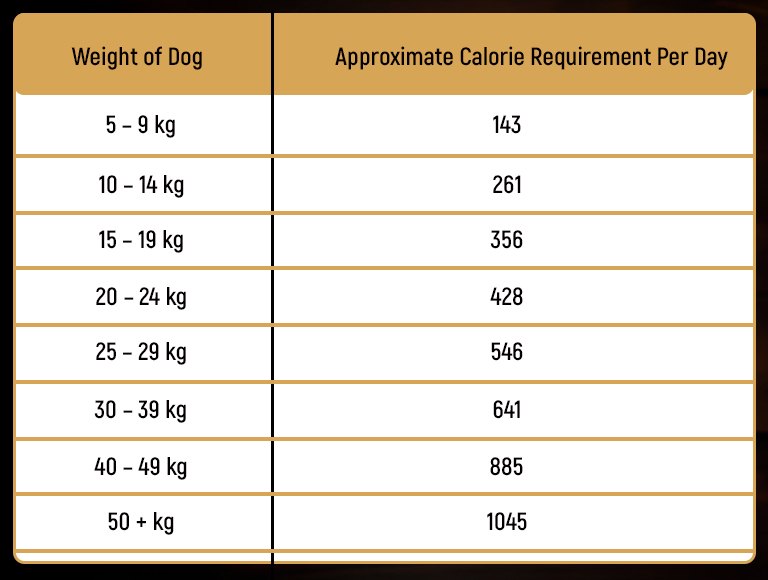
Though a dog’s nutritional and calorie needs are highly dependent on the above-mentioned factors, below are some daily feeding guidelines that may apply to all healthy, active canines.
How Often to Feed Your Dog?
As a thumb rule, you should feed your dog twice a day, once in the morning and once in the evening. However, puppies need to be fed more frequently, i.e., three to four times a day. As they grow, they can be gradually shifted to twice-a-day meals.
These generalisations may vary if you have working dogs, those that are facing health problems or dogs with specific needs.
Importance of Feeding the Right Amount of Food
Just like humans, it is crucial that dogs are fed the right amount of food for their overall well-being.
- Prevents Obesity
Overfeeding your dog can lead to obesity, which in turn increases the risk of heart problems, joint issues, breathing difficulties and even certain cancers.
- Maintains Optimal Weight
If you don’t keep your dog’s food portions under control, there are chances that it might end up getting overweight or remain underweight.
- Provides Proper Nutrition
If you underfeed your dog, it may suffer from nutrient deficiencies, leading to low energy. Ensuring an optimal quantity of food helps support their immune system and overall well-being.
- Boosts Energy and Immunity
Feeding your dog the correct amount of food helps provide them with the energy needed for their daily activities and supports a strong immune system.
- Supports Healthy Growth
Feeding puppies the optimal quantity of food helps support their healthy growth. However, overfeeding isn’t good as it may lead to health problems, especially those of large breeds.
- Promotes Longevity
A well-balanced diet is the key to your dog’s overall well-being and helps them live a long and healthy life.
Concluding Note
Determining the optimal amount of food for your dog depends on many factors. Always remember that everyone has unique needs when it comes to food and nutrition. However, always prioritise high-quality food and limit treats to under 10% of daily calories to prevent obesity and ensure long-term health. You may also seek your veterinarian’s advice to determine the optimal quantity of food that your dog will benefit from.