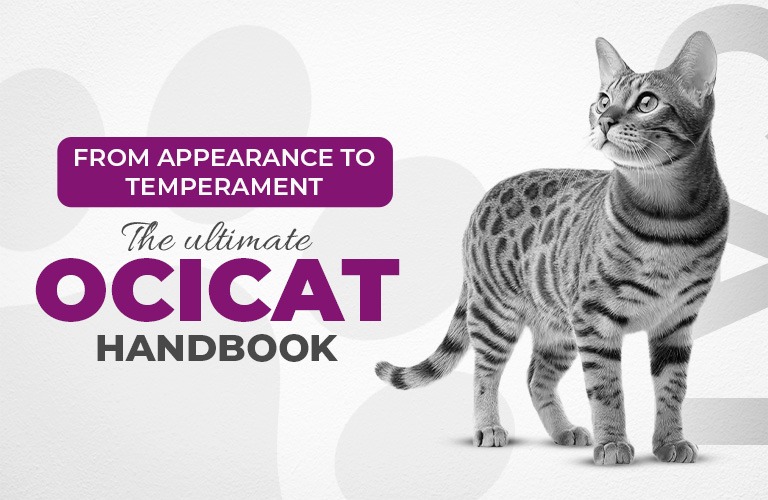
Picture this: an elegant spotted coat packed with heavy muscles, alert eyes shining with curiosity, and a playful spirit full of energy. This fairly sums up the Ocicat, which combines the eye-catching aesthetics with an affectionate, people-friendly personality, making it a popular and lovable cat breed. And, if you are planning to bring this little bundle of joy home, you must know the specifics of this breed.
In this blog, we will delve into the Ocicat breed’s history, personality traits, grooming requirements, training needs and much more. Get ready to unleash the mini-leopard in your life.
Let’s Begin!
Ocicat history & origin
The Ocicat breed originated in the 1960s in the United States when a breeder, Virginia Daly, was experimenting with Siamese cats. Unexpectedly, she ended up creating a kitten with striking ocelot-like spots. As a result, by crossing Siamese, Abyssinian and American Shorthair cats, the Ocicat was developed. By the late 1980s, Ocicats had gained worldwide recognition in cat shows, celebrated for their exotic, wild appearance and affectionate personality.
Breed overview
- Size – Medium to large
- Height – 9 to 11 inches
- Weight – 2.5 to 7 kg
- Life span – 12 to 18 years
- Appearance –Muscular ocelot-like appearance with almond-shaped eyes and sleek, velvety coats. Their coat colours range from brown, blue, chocolate and cinnamon to lilac, fawn, gray and silver.
- Temperament –Friendly, curious, intelligent, affectionate and outgoing.
Personality
Ocicats are known for their social, confident, easy-going, and smart personalities. They never fail to shower attention and affection, making them ideal for families. Ocicats are high-energy cats who love interactive playtime and get along well with children and other pets.
Popular for their captivating looks and athletic build, their short and glossy coats display a distinctive spotted tabby pattern spread across the shoulders, sides and back, resembling that of wild cats. Due to their curious and intelligent nature, Ocicats learn tricks quickly and are easy to train. Furthermore, their adaptability makes them form strong bonds with their human companions and other pets.
Diet & nutrition
Ocicats are pretty active and highly energetic cat breeds that require a well-balanced and nutritious diet packed with essential vitamins, minerals, fats and carbohydrates to ensure proper growth and development. Make sure to feed them high-quality animal meat since they are obligate carnivores. Always look for foods with natural, hypoallergenic ingredients with prebiotics and probiotics to prevent stomach sensitivities. Also, focus on portion control to maintain a healthy weight and provide them with enough drinking water for optimal hydration. Please note that their dietary requirements may vary according to their size and activity levels. Consult your veterinarian for tailored dietary recommendations.
Grooming considerations
Ocicats have short coats and they don’t generally shed a lot, so brushing them weekly would be sufficient to remove loose fur and maintain their shiny coat. Trim their nails regularly, keep their environment clean, empty the litter box on time and focus on their dental hygiene to keep them healthy. If you notice any eye or ear changes, consult your veterinarian for timely treatment.
Enrichment & training
Ocicats require lots of mental stimulation and physical activity since they are energetic, curious and intelligent cat breeds. Puzzle toys, game of fetch, climbing, etc., challenge their hunting instincts and keep them mentally fit.
Clicker training with praise and rewards is a great way to teach them favourable behaviours and make them obedient adults. Ocicats are eager to learn new things, making them highly trainable. Make sure to stay consistent and patient to make your training sessions more enjoyable and effective.
Health issues
Ocicat lifespan is typically between 12 and 18 years. They are generally healthy and free from inherited health issues. However, they may be susceptible to certain health conditions, including Hypertrophic Cardiomyopathy (HCM), Progressive Retinal Atrophy (PRA), Pyruvate Kinase (PK) Deficiency and Amyloidosis. Keep an eye on them for any unusual symptoms and take your cat for routine vet checkups to detect potential illness, if any, at an early stage and provide timely treatment.
Final Words
Ocicats are outgoing, adaptable and affectionate, making them a perfect fit for families and multi-pet households. This little pack of fun and energy is easy-going and with the right care and training, you can keep them healthier and happier. So, if you are planning to add an Ocicat to your family, get ready for endless love, cuddles and attention.
Ocicat Cat Breed – Frequently Asked Questions (FAQs)
Q1. What is an Ocicat?
Ans. An Ocicat is a crossbreed between Siamese, Abyssinian and American Shorthair Cats, developed in the 1960s. It is well known for its elegant coat colour, muscular build and affectionate, friendly, loyal and intelligent temperament.
Q2. How much does an Ocicat cost?
Ans. An Ocicat kitten typically costs between S$1,100 to S$ 3,400, depending on the cat’s lineage, quality and import costs.
Q3. Do Ocicats make good family pets?
Ans. Yes, Ocicats make a good pet because of their friendly, adaptable, affectionate and playful personalities.