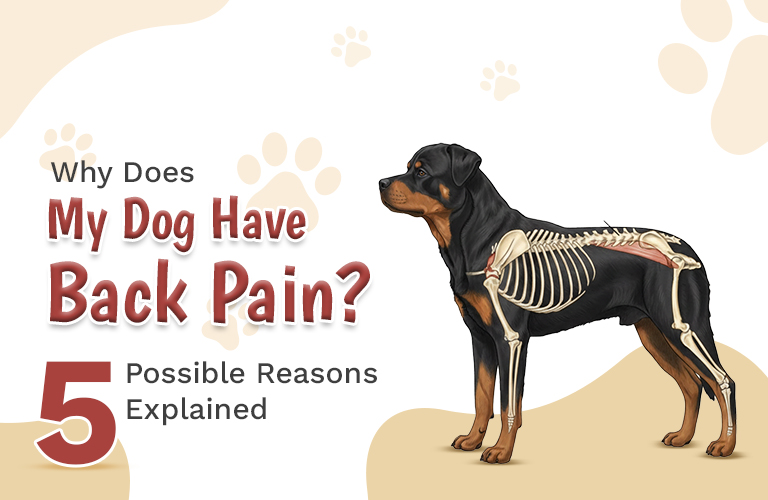
Back pain in dogs is a common yet distressing issue that can significantly impact their mobility and quality of life. The common symptoms of back pain in dogs include hunched posture, reluctance to move, yelping when touched or dragging hind legs. However, with timely veterinary care and with the administration of appropriate supplements and treatments, back pain in dogs can be kept under control. In this blog, we will explore some of the most common reasons and signs of back pain in dogs to help you take appropriate action when required.
Read on to find out more!
5 Possible Reasons Behind Back Pain in Dogs
Let’s look at some of the possible reasons that lead to back pain in dogs.
1. Osteoarthritis
Osteoarthritis is one of the common reasons behind back pain in dogs, especially when it comes to senior canines. The degenerative joint disease affects the cartilage in spinal joints like the facet joints in the lower back, leading to inflammation, bone spurs and restricted movement. Common signs of Osteoarthritis can include stiffness after rest, a hunched posture, reluctance to climb stairs or jump and limping.
2. Trauma
Trauma, often resulting from a sudden impact that damages the spine, muscles or surrounding tissues of dogs, leads to frequent back pain. Common reasons of trauma generally include car accidents, falls from heights, fights with other dogs and bites. This can lead to fractures, dislocations or soft tissue injuries like muscle strains. Dogs experiencing trauma may exhibit acute signs such as yelping in pain, a hunched back, reluctance to move or bear weight on hind legs, dragging paws, loss of coordination, swelling or bruising.
3. Muscle Strain
Muscle Strain is one of the most common yet one of the most overlooked causes of back pain in dogs. The condition is generally caused by overexertion during play, sudden twists, jumps, or rough activities that stretch or tear back muscles. Unlike trauma, Muscle Strains cause localised muscle spasms and tightness without nerve damage, leading to temporary discomfort that usually resolves faster with rest. Dogs experiencing Muscle Strain may yelp when touched along the back, walk stiffly or with a hunched posture, tremble, pant excessively or show reluctance to turn or climb.
4. Infections
Infections such as diskospondylitis is a less known but quite a common reason behind back pain in canines. It is a bacterial or fungal invasion of the intervertebral disks and adjacent vertebrae, causing intense spinal pain, stiffness and potential neurological decline in dogs. Symptoms include reluctance to jump or climb, stiffness, trembling, fever, weight loss and potential paralysis in advanced cases.
5. Cancer
Cancer can cause excruciating back pain in dogs when tumors grow on the vertebrae, nerve roots, or surrounding soft tissues, leading to compression, tissue destruction and inflammation. The spinal tumors primarily affect senior or large-breed dogs and lead to severe, progressive pain, hind leg weakness or paralysis.
Concluding Note
Back pain in dogs arises from diverse causes like intervertebral disc disease, osteoarthritis, trauma, muscle strains, and infections such as diskospondylitis. However, each of the conditions comes with overlapping symptoms like hunched posture, yelping or reluctance to move. In any case, early veterinary diagnosis is essential in order to provide dogs with appropriate treatment and manage their pain. By staying vigilant and prioritising professional care, you will be able to help your dogs reclaim comfort and ease of mobility.