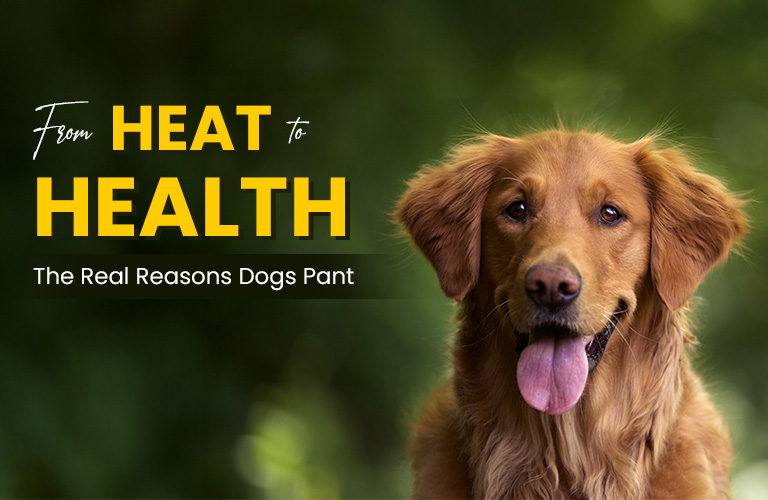
Why is my dog panting? Do dogs pant when happy?
Is dog panting a serious issue? All these questions cross every pet parent’s mind once in a while when they see their beloved companion panting more than usual. Fret not, we are here to clear all your doubts! Panting is a natural and essential dog behaviour that acts as a mechanism to keep their body temperature regulated and manage stress-related situations. While panting is usually harmless, excessive or unusual panting may indicate a health condition that should be taken seriously.
In this blog post, we will uncover the most common reasons for dog panting and some easy ways to manage them and keep your little one hale and hearty.
Let’s get started!
Why do dogs pant?
Various reasons make a dog pant. Let’s understand each one of them in detail:
Excitement
Dog panting is a normal response to extreme excitement or happiness. When your canine companion is happy, excited or enthusiastic, panting is a normal behavioural response. For instance, when they get a treat, meet new people, spot another furry animal or go for their favourite sports activity, they may pant out of excitement or joy.
Stress or Anxiety
When your dog encounters fireworks, thunderstorms, separation from their guardian, loud noises, car journeys, or vet visits, they may feel stressed, anxious or scared, making them pant more than normal. This type of panting is usually accompanied by yawning, pacing, whining, or hiding.
Physical Activity
Physical activities, including running, hiking, swimming, playing, etc., especially in hot weather, may cause dog panting. Just like humans breathe faster after a workout, dogs also pant more after a heavy workout since their muscles require more oxygen. Hence, make your dog do moderate exercises to keep them fit and prevent excessive panting.
To Cool Down
Dogs regulate their body temperature by panting since they do not sweat like humans. Dogs have fewer sweat glands in their paw pads and hence they commonly pant to cool themselves. Panting helps them to inhale, humidify and exhale the air from their lungs quickly. This increases water evaporation from their nose and lungs, hence cooling their body from the inside out.
Reasons for excessive panting in dogs
Where normal panting is nothing to worry about, if your dog is panting excessively, it might be due to an underlying health condition that requires immediate attention. Here are a few causes that make your dog pant excessively:
Pain or Discomfort
Pain, injury, illness, trauma, etc., from surgery, arthritis, fractures or sprains are some of the reasons that can make your dog pant excessively. It is often accompanied by lethargy, loss of appetite, groaning, etc.
Heatstroke
Heatstroke can lead to excessive panting in dogs. While normal panting helps dogs to regulate their body temperature, heatstroke can cause extreme panting that can be life threatening life-threatening if left unattended.
Respiratory Issues
Various respiratory problems, such as pneumonia, chronic bronchitis, etc., make it harder for dogs to breathe properly. Such issues affect their lungs, airways and throat, making them struggle to get enough oxygen, resulting in excessive panting.
Obesity
Carrying extra pounds is one of the most common yet overlooked reasons for an excessively panting dog as it puts more strain on the dog’s body. Obese dogs struggle to regulate their body temperature even with minimal physical activity.
Allergies
When a dog ingests something toxic or eats certain foods that don’t suit them, it may trigger allergic reactions, making them pant heavily. Food or environmental allergies are often accompanied by swelling, irritation, drooling or pawing.
What to do when your dog pants excessively?
Let’s have a quick rundown on some simple ways to help a panting dog and make them feel relaxed and safe as soon as possible:
- Keep track of breathing pattern: Keep an eye on your dog’s breathing pattern and if you notice them breathing loudly, heavily or quickly, consult the vet immediately.
- Manage stress: Stress, anxiety or fear can make dogs pant rapidly. Make sure to keep them away from such environments, situations and people.
- Avoid over-exercising: Making your dog exercise more than their capacity can result in excessive panting. Make sure to consider their physical potential and make them exercise accordingly.
- Watch out for triggering signs: Keep your furry friend away from any triggers such as allergies, illnesses, injuries or health conditions that may cause extreme panting.
- Regulate body temperature: Overheating can also make your dog pant more. Make sure you regulate their body temperature by keeping them in a cool, shaded area with access to fresh water.
Wrapping Up
Dog panting is a common dog behaviour and is usually not a reason to worry, but an excess of such behaviour can sometimes be a matter of concern. Hence, it is essential to learn about the reasons, signs and ways to tackle a panting dog. Equip yourself with the information shared in this blog and don’t forget to consult the vet for expert recommendations.
Happy Pet Parenting!