The big question that occupies every pet parent’s mind whenever they buy a flea and tick treatment is, how fast will it start working? Well, the answer depends on various factors, including the type of treatment, the severity of the infestation and your pet’s health conditions.
In this blog post, we will walk you through the typical timelines for flea and tick treatments and the factors that affect the duration of action, so that you stay updated and keep your furry friend protected.
Let’s begin!
Key Timeframes: How long does flea & tick treatment take to work on dogs?
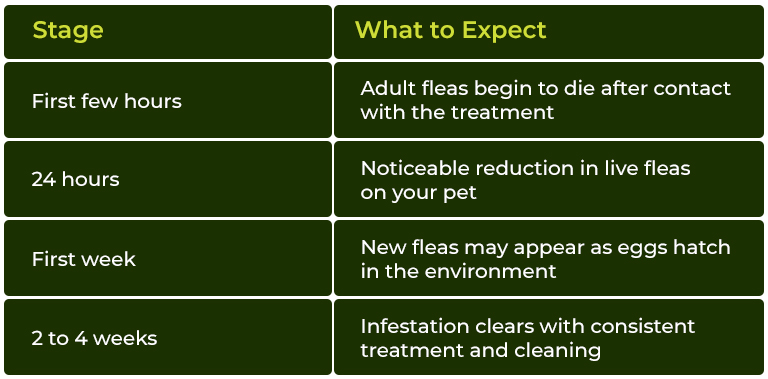
Most treatments start killing fleas & ticks within a few hours of application. However, this doesn’t indicate that the infestation is fully gone. If eggs, larvae and pupae are still present in your home, they will continue to develop and can cause a full-blown infestation over the following days or weeks.
Let’s take a look at key timelines for flea treatment:
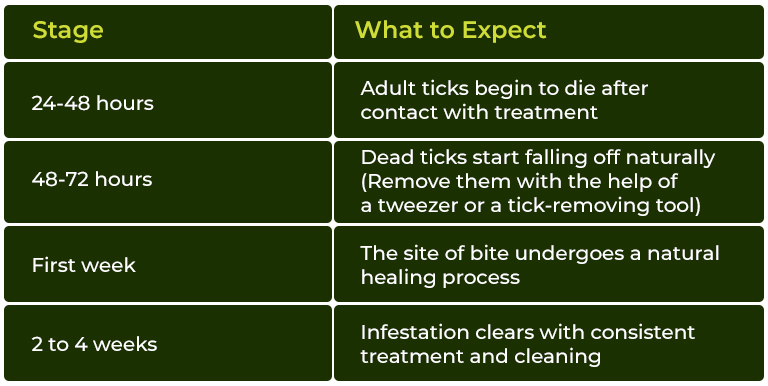
Let’s take a look at key timelines for tick treatment:
Signs that flea & tick treatment has started working
After administering a flea or tick treatment, you will usually start seeing results within a day or two. Flea treatments start working quickly, whereas tick treatments may take longer.
Here are a few signs that can indicate that a flea & tick treatment has started working on your dog:
# Fleas
- You will see dead fleas within 24 hours.
- It may take a few days for the itching to reduce.
- Depending on the environmental conditions, the flea life cycle from eggs to adults can take anywhere from a couple of weeks to several months.
# Ticks
- You will see dead ticks within 24–48 hours.
- Dead ticks may or may not fall off your dog.
Factors affecting the time flea & tick treatments take to work
Multiple factors affect the timelines of flea & tick treatments. Let’s have a look:
- Type of treatment
Flea and tick treatments work through diverse mechanisms, resulting in varying durations of action. For example, some topicals offer quick relief by eliminating adult fleas on contact. In contrast, a few chewables may take more time to eradicate these parasites.
- Severity of infestation
The severity of the infestation also plays a crucial role in the efficacy of a flea or tick treatment. If the infestation is mild, it may disappear rapidly. Severe flea and tick infestations may take longer to completely eliminate the parasites.
- Health condition
Your pet’s health conditions can also affect the timeline and efficacy of a flea and tick treatment. Pets with a compromised immune system may respond differently to treatments compared to healthy pets. Your pet’s age, weight and breed also determine how the treatment will respond.
- Environmental factors
Environmental factors also impact the efficacy of a flea and tick treatment. When you treat your pet’s environment too, by washing their bedding, vacuuming the carpets, trimming the lawn, and keeping their surroundings clean, it adds to the efficacy of the treatment.
The Bottom Line
Understanding the timelines of flea and tick treatments helps you protect your canine companion effectively and avoid unnecessary stress. Remember, administering flea and tick treatments consistently matters and missing even a single dose can leave your furry mate vulnerable to fleas, ticks, and the diseases they carry.
Equip yourself with the information mentioned in the blog about the time taken by a flea and tick treatment to work and choose a product that fits your dog’s lifestyle. Don’t forget to consult your veterinarian and follow a year-round parasite prevention schedule to keep your pet comfortable, healthy and parasite-free.