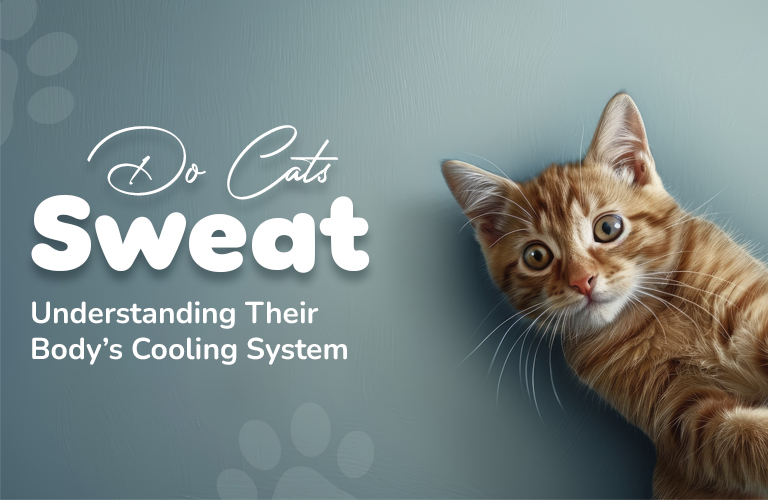
Can cats sweat? How do they sweat? What helps them cool down? And the list goes on…These are some of the common questions that pop into every cat parent’s mind. Although cats are known for their “cool-as-a-cucumber” personality, the fact is-THEY SWEAT! Yes, cats sweat to regulate their body temperature using a small number of sweat glands, but you probably don’t see it.
Continue reading to understand how their body works so that you can recognise when your cat is comfortably warm versus when they are overheated and require veterinary attention. In this blog post, we have mentioned why and how cats sweat, along with some practical tips to keep your cat cool and comfortable.
Let’s get started!
Do cats sweat?
Yes, cats do sweat, but not like humans do. They usually sweat in small amounts to cool themselves and regulate their body temperature. The normal body temperature for a cat ranges between 38°C and 39.2°C (100.5°F and 102.5°F). However, if the temperature rises to 40.5°C (105°F) or higher and their body becomes too warm, they begin to sweat to lower their body temperature. Moreover, cats also sweat due to stress and anxiety, such as during vet visits, travelling, environmental changes, loud noises or unfamiliar events.
How do cats sweat?
Unlike humans who have multiple sweat glands, cats have fewer sweat glands that are primarily located in specific hairless areas like paw pads, chin and around the anus. Because of their limited number of sweat glands, cats rely more on behavioural and physiological strategies to cool themselves, like licking their fur for evaporative cooling, seeking shady spots (such as tiled floors or a cool bathtub), stretching out, reducing activity or panting.
Technically, there are sweat glands in the skin of a cat, but they are a different kind of gland, called apocrine sweat glands. On the other hand, eccrine sweat glands are present in their paw pads, nose and anus through which they release sweat. When you see damp footprints on hard floors or tables, know that your cat may be sweating because of heat or stress.
Signs your cat is overheated & needs help
Here are a few common signs that indicate your cat’s body is overheated and needs veterinary attention:
- Excessive sweating
- Shaking or seizures
- Confusion or disorientation
- Drooling
- Panting or laboured breathing
- Restlessness
- Vomiting or diarrhoea
- Bright red tongue or gums
If you notice any of these signs of overheating, move your cat to a cooler environment immediately and seek veterinary help as soon as possible.
Tips to keep your kitty cool
Let’s have a rundown of some easy yet effective ways to keep your cat cool and comfortable:
- Provide access to cool and fresh water at all times to keep them hydrated.
- Keep your cat in shaded and cool areas, especially outdoor cats.
- Use fans, air conditioners and cooling mats in hot weather.
- Keep curtains and blinds closed during the day.
- Never leave your cat alone in a parked car, garage or confined space.
- Limit outdoor exposure and physical activity during hot days.
- Monitor signs of overheating and consult a vet in case you notice anything unusual.
Wrapping Up
Cat sweating is a normal process that helps them cool down and stay comfortable. However, if their body temperature rises above normal, it might be a cause for concern and require professional help. Understanding your cat’s cooling behaviour will help you spot the difference between normal sweating and overheating so that you can prevent the risk of heatstroke and keep them protected. Remember, with a little awareness and simple changes, you can keep your cat healthy and enjoy warm weather without any stress.
Happy Parenting!