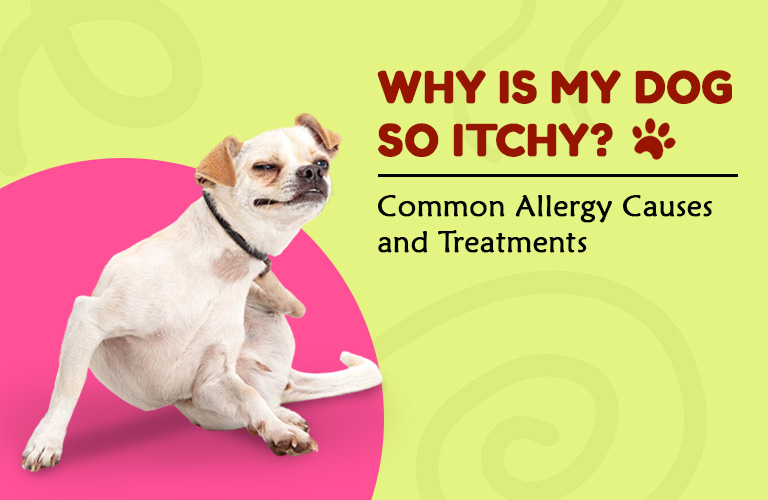
Seeing your doggo scratching excessively can be a cause for concern for you as a pet parent. While a random scratch may not be something to worry about, excessive itching in dogs is mostly linked to underlying health conditions. According to studies, allergies are one of the common factors that lead to itchy skin in dogs. Many dogs are sensitive to environmental allergens like pollen, mould, grass, and dust, or specific food ingredients. In this blog, we will discuss some of the common allergens that dogs are vulnerable to and ways to manage the reactions.
Read on to find out more!
What Causes Allergic Reactions in Dogs?
Allergic reactions in dogs occur when their immune system overreacts to otherwise harmless substances, which their immune system mistakenly identifies as harmful. Common triggers include environmental allergens like pollen and dust, flea saliva, certain medications, and certain food proteins like chicken and beef.
Symptoms of Allergic Reactions in Dogs
Below are some of the common dog allergy symptoms.
- Excessive scratching
- Licking and chewing
- Recurrent ear infections
- Red or inflamed skin
- Raised bumps on skin
- Swollen face, eyelids, or lips
- Watery eyes
- Sneezing
- Vomiting or diarrhea
Common Allergens that Dogs Are Exposed to
The following are some of the common allergens that dogs are exposed to.
- Food Ingredients
Food allergies in dogs are caused by an immune reaction to specific proteins or grains present in their diet. Dogs can develop an allergy to an ingredient at any age. The most common food allergens in dogs include beef, chicken, dairy products, wheat, eggs, soy, lamb, fish, and pork. Common signs of allergies include severe itching, inflamed skin, and hair loss.
Therefore, if you find out that your pooch is allergic to a particular food ingredient, the best approach is to eliminate the product from their diet altogether.
- Environmental Allergens
Environmental allergens such as pollen, house dust mites, mould spores, and animal dander may cause itchiness in dogs when their immune system overreacts to these substances, a condition known as atopic dermatitis. These allergens may enter the body through the skin or be inhaled.
One way to help manage allergic reactions is to reduce allergen exposure. After outdoor walks, you may wipe your dog’s paws and coat with a damp cloth. Also, you may limit your pooch’s time outdoors when pollen levels are highest. You should also wash their bed regularly with a pet-friendly detergent. If you suspect indoor allergens, installing a HEPA air purifier may be helpful.
- Flea Saliva
Flea infestations not only cause discomfort in dogs but may also trigger intense itching due to an allergic reaction to flea saliva. Known as Flea Allergy Dermatitis (FAD), the hypersensitivity reaction can trigger persistent scratching, hair loss, redness, or scabs. The uncontrolled itching also leads to self-trauma like chewing or licking.
To keep your doggo protected from Flea Allergy Dermatitis, it is primarily essential to keep fleas at bay. An effective year-round flea preventive can help control existing flea infestations and prevent future infestations. As fleas also tend to remain present in the environment, washing your pet’s bedding and vacuuming your furniture, carpets, and rugs can help reduce flea populations in the environment.
- Insect Stings & Bites
Insect stings and bites are a common cause of allergic reactions in dogs when their immune system reacts to the proteins present in an insect’s saliva or venom. Common insects whose bites may cause allergic reactions in dogs include wasps, bees, ants, hornets, and mosquitoes. The reactions include uncontrolled itching, hives, or swelling.
If you suspect that your furry friend is having a reaction to an insect bite, the best approach would be to visit a veterinarian who can prescribe appropriate treatments to manage the reaction and any associated symptoms.
- Chemicals
Your doggo can develop an allergic reaction called contact dermatitis after coming into contact with certain chemicals present in shampoos, floor cleaners, laundry detergents, disinfectants, or other household chemicals. Common symptoms of such allergic reactions include severe itching, rashes, small bumps, redness, hives, swelling, or hair loss.
To prevent such allergic reactions, it is best to use pet-friendly shampoos and household cleaning products. However, in case of a reaction, you should seek immediate veterinary guidance for effective management.
- Treatments & Vaccines
Although uncommon, dogs may sometimes develop an adverse reaction after receiving treatments or vaccines. Reactions can range from mild skin irritation to severe allergic reactions. Signs of reactions may include itching, hives, redness, swelling of the lips, face, or muzzle, vomiting, diarrhea, excessive drooling, and difficulty breathing.
If you suspect your dog is having an allergic reaction to a treatment or vaccine, it is crucial to get in touch with your veterinarian immediately, who can assess the reaction and recommend appropriate treatment.
Concluding Note
Managing dog allergies requires careful observation and a lot of patience. In case of an allergic reaction, it is crucial to identify the root cause and take the necessary steps to ensure your dog’s comfort. Always remember that every dog is unique, and as a pet parent, it is essential that you stay consistent and implement effective strategies to keep your dog comfortable and safe.