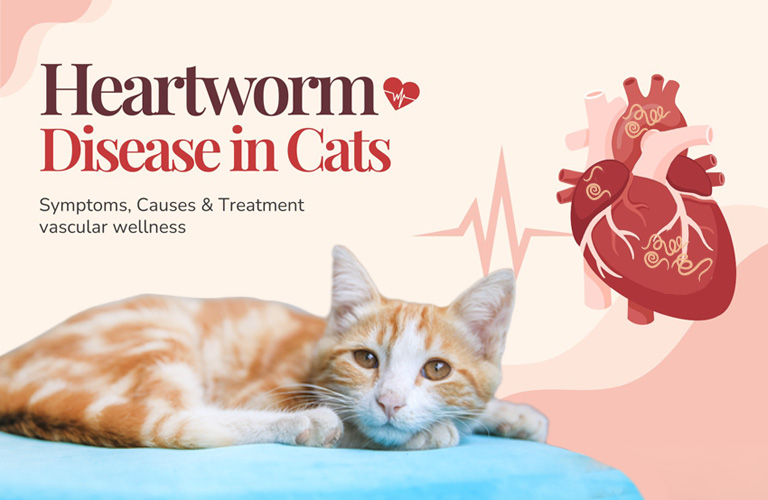
Heartworm disease in cats is a serious but often overlooked condition that can affect both indoor and outdoor cats. A single mosquito bite can lead to subtle symptoms and in severe cases, it can cause serious breathing problems or sudden collapse.
In this blog post, we will cover everything you need to know about heartworm disease in cats, including the symptoms, causes, and practical tips for prevention and treatment.
Let’s get started!
What are heartworms?
Heartworms are large, spaghetti-like worms that grow up to a foot long and live in the heart, associated blood vessels and lungs for several years. Adult heartworms reproduce in their natural hosts (primarily dogs). Cats are an atypical host and usually do not have circulating microfilariae and adult heartworms rarely reproduce in cats. Heartworms can cause serious damage to the heart, lungs and other organs if left untreated.
How do heartworms infect cats?
Heartworms are transmitted when an infected mosquito bites a cat and transfers infective heartworm larvae (L3) into the cat’s bloodstream. The larvae migrate through the cat’s tissues over several months before reaching the blood vessels of the lungs and, in some cases, the heart. Even a small number of worms can cause significant inflammation and damage, leading to heartworm disease.
How common is heartworm in cats?
Heartworm disease in cats is less common than in dogs, but it is not rare. Cats can also become infected through the bite of an infected mosquito. Overall, the risk varies by region and outdoor exposure and feline heartworm disease may be underdiagnosed because some cats don’t show any symptoms and don’t develop infections detectable by standard tests.
What are the first signs of heartworms in cats?
Take a look at the initial signs of heartworms in cats:
- Coughing or difficulty breathing
- Exercise intolerance
- Rapid breathing
- Reduced activity
- Weakness or lethargy
- Vomiting
- Loss of appetite
- Diarrhoea
How to treat heartworms in cats?
The treatment of heartworm disease in cats is difficult and mostly supportive rather than curative since there is no approved drug to eliminate adult heartworms in cats and killing the worms can trigger severe reactions. Veterinarians typically focus on rest, corticosteroids to reduce inflammation, and other supportive care such as oxygen therapy or IV fluids if the cat has breathing trouble. In rare, severe cases, surgical removal of worms may be considered. Therefore, preventing the disease in the first place is the best way to keep your cat protected.
Simple tips for heartworm prevention in cats
- Keep track of the symptoms and seek veterinary help if you notice anything unusual.
- Limit outdoor exposure during peak mosquito hours (especially at dusk and dawn).
- Maintain hygiene to prevent mosquito breeding by removing standing water, mowing the lawn and keeping your surroundings clean.
- Avoid using mosquito repellents on cats unless they are labelled as safe for cats.
- Administer year-round heartworm preventive treatments to keep your cat protected. Consider treatments based on your cat’s age, weight and lifestyle for the best results.
- Schedule routine vet visits for early detection and timely treatment.
Wrapping Up
Although heartworm disease is less common in cats, it can still affect them and cause life-threatening damage. However, with the right knowledge and preventive care, you can help protect your cat from this serious disease. So, learn about heartworms in cats with this blog and keep your feline friend safe and healthy.