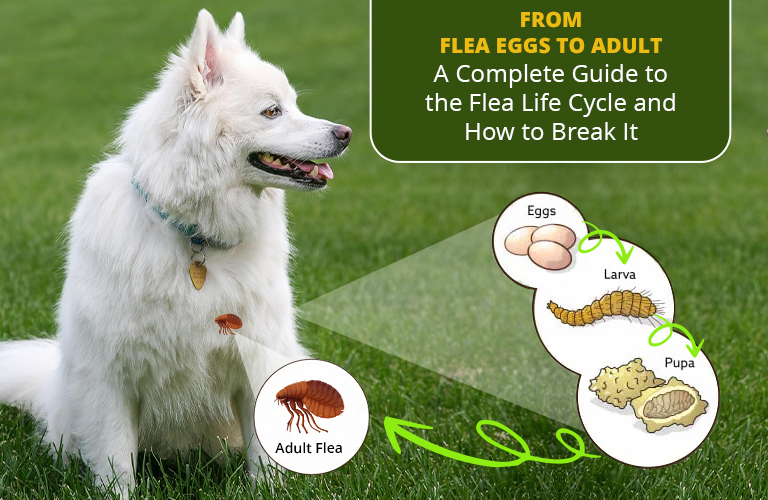
From Flea Eggs to Adult – A Complete Guide to the Flea Life Cycle and How to Break It
Fleas might look tiny and harmless, but their life cycle is quite efficient, making them a threat to your beloved companion. What looks like a small flea bite can turn into a full-fledged infestation in no time, making your pet uncomfortable and ill. Hence, understanding the flea life cycle is helps maintain your pet’s overall health and vitality.
In this blog post, we will break down the flea life cycle by explaining how fleas grow, reproduce, and spread, along with practical prevention tips so that you can protect your pet as well as maintain your peace of mind.
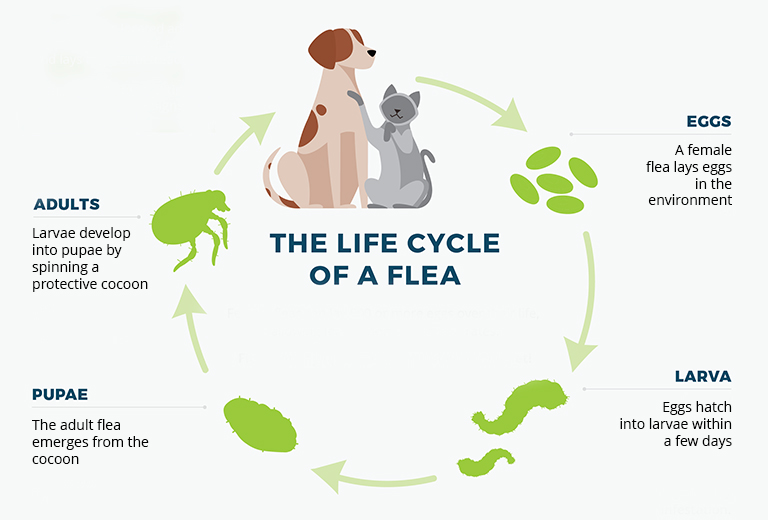
The 4 stages of the flea life cycle
The flea lifecycle consists of 4 main stages – eggs, larvae, pupae and adult fleas. Depending on environmental conditions, the complete cycle can take anywhere from a few weeks to several months. Let’s have a look at each of these stages:
Flea Eggs
Flea eggs are small, oval-shaped and white or cream in colour. When a female flea finds an animal host, she begins mating after taking a blood meal and lays up to 50 eggs per day. These eggs get dispersed throughout your pet’s fur and surroundings, such as bedding, carpets, furniture, and outdoor areas and hatch within 1-10 days, depending on the environmental conditions like temperature and humidity.
Flea Larvae
After hatching, flea eggs enter the larval stage, where they feed on organic debris and “flea dirt” for 5 to 20 days. Flea larvae are tiny, worm-like creatures that thrive in dark and humid environments like bedding, carpets and soil. This is a crucial stage for their growth.
Flea Pupae
The larvae enclose themselves in a protective, silk-like cocoon and enter the pupal stage. This is the most difficult stage of the flea life cycle to get rid of, as the cocoon protects the developing flea from environmental conditions. The flea can remain inside the cocoon for an extended period waiting for favourable conditions. They are difficult to detect as their sticky cocoons easily blend into the surroundings.
Adult Fleas
Adult fleas emerge from the pupae and look for a host (dog or cat and sometimes even humans) to feed on within hours of hatching. This stage lasts for 2 to 3 months, during which female fleas begin mating to lay eggs and repeat the lifecycle. They not only cause pain and discomfort to your pet but also transmit harmful diseases, making timely prevention essential.
Tips to break the flea life cycle
Here are a few easy yet effective tips that help in breaking the flea lifecycle and keeping your pet protected:
- Administer flea preventives: Choosing the right flea preventive treatment goes a long way in killing existing fleas and preventing future infestations. Simparica Trio, Frontline Plus, Bravecto Plus, Seresto Collar and Nexgard Combo are some of the popular options. Consider your pet’s lifestyle and comfort level before using any treatment. Consult your veterinarian to choose an appropriate flea preventive that works best for your pet.
- Maintain hygiene: One of the crucial steps in keeping fleas away from your home and pet is maintaining proper hygiene. Clean bedding, vacuum furniture, trim the grass and keep the yard clean to prevent fleas from hiding, reproducing and infesting your pet.
- Consider pest control: In case of severe infestation, you can consider pest control to eliminate existing fleas as well as help prevent re-infestations. Professional pest control services are especially helpful when fleas have spread throughout the home.
- Use natural remedies: Some pet parents use natural home remedies, like diatomaceous earth for environmental flea control. If you are considering essential oils, use them only after consulting with a vet, as some of them may be toxic to pets.
Keep your pets healthy and flea-free
Understanding the stages of the flea life cycle and adopting simple steps to break the cycle makes a huge difference in ensuring your pet’s safety. By learning how fleas develop and taking preventive measures early, you can keep your furry companions happy, healthy, and flea-free.