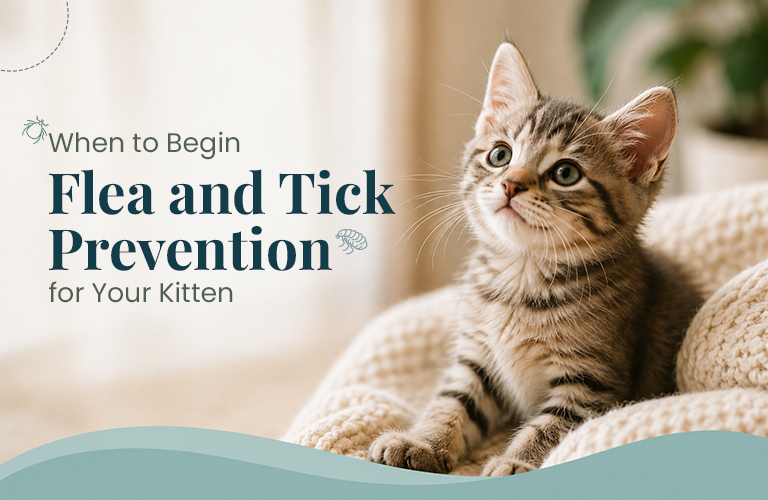
Fleas and ticks might look tiny, but their impact on your cat can be serious, especially for younger kittens. Kittens can get fleas and ticks both outdoors and indoors at any time of the year; hence, it is important to follow a proper prevention plan to keep these parasites away. But the most important question is, “When can you start flea and tick treatment for your kitten?
Continue reading to uncover the importance of flea and tick prevention and when you should start with the prevention.
Does my kitten need flea & tick prevention?
Yes, kittens need to be on flea and tick prevention as early as possible. Early prevention helps reduce the risk of infestations, minimises the risk of transmission to other pets and humans and helps maintain your cat’s health. Fleas and ticks make life miserable for your feline friends by causing pain, scratching, and skin damage and they also pose serious health risks, such as:
- Anaemia: Fleas and ticks are blood-sucking parasites that feed on your pet’s blood. Since kittens have a low blood volume compared to their body weight, a heavy infestation can remove enough blood to cause anaemia, often characterised by pale gums, weakness and loss of appetite.
- Flea tapeworms: Kittens can ingest infected fleas while grooming, leading to flea tapeworm infections. Tapeworms live in the kitten’s intestines and cause digestive issues, weight loss, vomiting and diarrhoea.
- Flea allergy dermatitis (FAD): Flea allergy dermatitis (FAD) is a skin condition caused by an allergic reaction to the proteins in flea saliva. A single flea bite can trigger a severe immune response, resulting in hair loss, excessive itching, constant scratching and skin inflammation.
- Bartonellosis (Cat Scratch Fever): Bartonellosis, also known as cat scratch fever, is an infection caused by the bacteria Bartonella henselae. While most infected cats show no symptoms, fever, lethargy, decreased appetite and swollen lymph nodes are some common signs.
Best time to start flea & tick prevention for kittens
There is no rule of thumb for the best time to start flea and tick prevention in kittens since every product is designed for cats of specific age groups and weight. Typically, flea and tick treatments can be started at 6 to 8 weeks of age; the exact timing depends on kitty’s age, weight, health condition, target parasites and product specifications.
Keep the following tips in mind before using any product:
- Read the product label.
- Never use puppy products on kittens.
- Consider your kitten’s age and weight when choosing any product.
- Consider your pet’s individual needs before buying any treatment.
- Consult your vet for safe, age-appropriate products.
For kittens with allergies or sensitive skin, it is recommended to consult your veterinarian for advice on choosing products with safe ingredients.
Tips to prevent flea & tick infestations in kittens
Let’s have a look at some tips to keep fleas and ticks away from your kitty and your home:
- Keep an eye on your kitten’s symptoms and if you notice anything unusual, consult a vet.
- Administer flea and tick preventive treatments year-round.
- Vacuum furniture, wash bedding, carpets and pillows and disinfect toys regularly.
- Trim the lawn frequently.
- Keep your pets well-groomed to deter pests from burrowing into their fur.
- Schedule routine vet visits for early detection of potential diseases.
Conclusion
Early parasite prevention gives your little one the best start sand adds quality years to your kitten’s life. You can start flea and tick prevention as early as 6-8 weeks of age and continue it year-round for uninterrupted protection. However, always consult your veterinarian for tailored recommendations and follow a year-round parasite prevention plan to keep your furball happy and parasite-free.