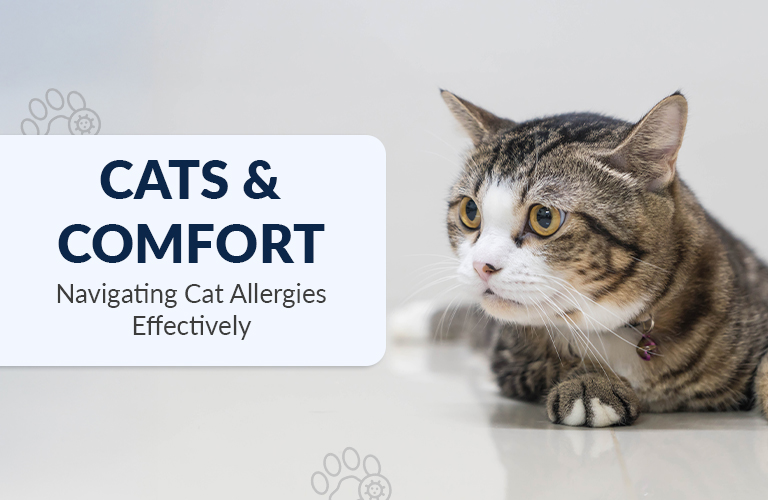
Bringing a cat home gives you companionship, endless purrs and playful antics that are worth bearing a few inconveniences for. But for many people who are allergic to cats, this joyful time is often accompanied by a runny nose, watery eyes and even asthma flare-ups. The good news? You can manage cat allergies with the right knowledge and effective strategies.
This blog post explains the symptoms and causes of cat allergies, along with some practical steps to manage them, so that you can enjoy quality time with your feline friend with fewer sniffles and more cuddles.
How to recognise cat allergies?
Here are a few symptoms that you may experience if you are allergic to cats:
- Wheezing
- Coughing or sneezing
- Runny or stuffed nose
- Breathing difficulty
- Skin rashes or hives
- Red, watery or itchy eyes
- Dry or inflamed skin
- Worsening eczema
- Throat or nose irritation
What causes cat allergies?
It is estimated that about 30 per cent of the world’s population is allergic to cats and dogs, with cat allergies twice as common as dog allergies. We usually think cat allergies are caused by cat hair, but this is not true. On the contrary, cats produce various allergens (usually proteins), irrespective of their age, sex or breed.
Fel d 1, a major cat allergen, found mainly in a cat’s urine, saliva and sebaceous glands, is one of the primary triggers of cat allergies. Dust, mould and pollen in a cat’s fur can also cause allergic symptoms in humans. Even hairless cats produce allergens in their saliva that are spread onto their skin and become dander after grooming, spreading allergies when they shed dander with allergens on it. Additionally, if one of your family members is allergic to cats, you are more likely to suffer from cat allergies.
Simple steps to manage cat allergies at home
Mentioned below are some easy ways to manage cat allergies effectively at home:
- Take an allergy test: Consider a cat allergy test, where the doctor would do a blood test to identify immune system antibodies (IgE) that react to proteins like Fel d 1 found in cat saliva, dander, and fur. They may also perform a skin test, where a tiny amount of cat allergen extract is pricked onto the skin to check if you are allergic.
- Eliminate allergens from your home: Keep your home as clean as possible to reduce allergens. Eliminate perfumes, scented candles and plug-in air fresheners as they can exacerbate allergy symptoms. Vacuum the carpets, clean the furniture, wash cat toys in hot water and mop the floor as they can trap the dander. Make sure you usea vacuum cleaner with a HEPA (High-Efficiency Particulate Air) filter to capture more air-borne allergens.
- Use allergy relief treatments: Take allergy relief treatments or shots to control and reduce the symptoms. OTC (Over the counter) and prescription treatments are available that help manage cat allergies. However, always check with your allergist or physician before starting any treatment to avoid any potential side effects.
- Groom your cat regularly: Groom your cat on a regular basis to reduce dander and prevent allergies. Bathe them every two to four weeks with a cat shampoo to keep their fur clean and wipe them with a damp cloth or anti-allergen wipes to remove the allergens from their coat. If possible, have a non-allergic person handle the grooming process.
- Maintain personal hygiene: Maintain personal hygiene to keep yourself protected from cat allergies. Wash your hands immediately after petting the cat and avoid letting your cat lick your skin or clothes. Do not touch your face, especially eyes, nose and mouth, to prevent the transmission of allergens. Also, keep your cat out of your bedroom to reduce allergen exposure while sleeping.
Final Thoughts
Living with cats does not mean you have to compromise your health or love for your little ball of fur. By practising some grooming tips and making a few environmental changes, you can significantly reduce allergy symptoms while keeping your feline happy and healthy. Using an air purifier at home, making your bedroom pet-free and consulting your healthcare provider about allergy treatments go a long way in managing symptoms and controlling cat allergies.
Remember, consistent cleaning and hygiene habits can help reduce allergen levels over time, making coexisting with cats both healthy and enjoyable. Educate yourself and follow the right approach to create a comfortable and cat-friendly household where both you and your cat thrive.